


Refuel Convenience Stores and Gas Stations Solutions
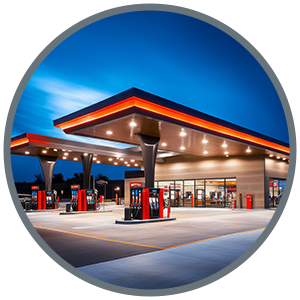
Acuity’s Petroleum Solutions delivers a unified, scalable ecosystem that brings together Convenience Store and Gas Station lighting, lighting controls, HVACR controls and an edge-to-cloud building management system into one connected platform, providing practical strategies for the outcomes that matter most and enhance the customer experience.
Refuel Featured Products
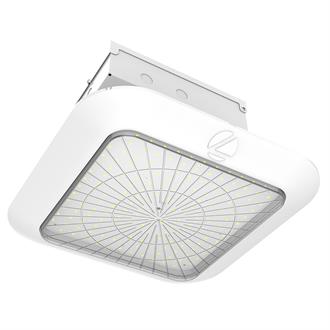



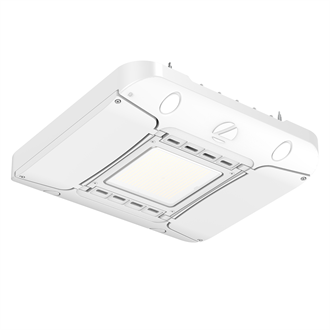

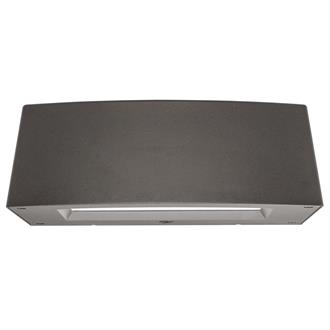


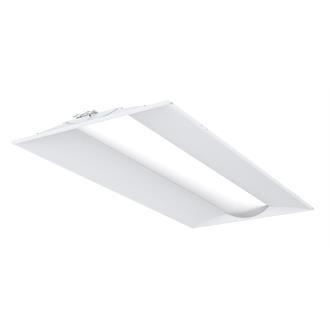




Lithonia Lighting

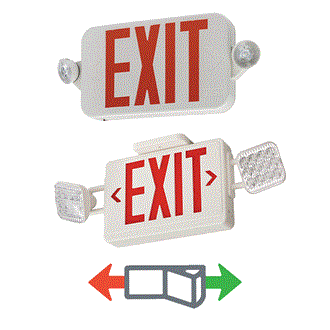
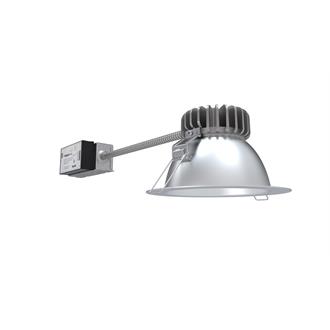
ECRG Switchable Emergency Combo
Lithonia Lighting Basics™ LED Emergency Combo Light, Swit...






Resources and Tools








Contact our Refuel Sales Experts
 Dylan Cook, Refuel Sales Manager, brings over 13 years of experience within the refueling industry, with a background that includes channel expertise and customer-focused leadership.
  Andrew Banovic, Refuel Vice President and Sales Channel Leader, brings deep expertise in the refueling market with a proven track record of leading sales strategy, channel growth, and customer-driven innovation across complex commercial environments.
 Frequently Asked Questions
-
Q. Why are energy costs so high in convenience store and refueling sites?
A. Convenience stores are among the most energy‑intensive commercial buildings, using more than four times the electricity per square foot of the average commercial facility. Continuous operation, high refrigeration loads, extensive lighting, and HVAC systems working against constant door openings drive consistently high energy costs.
-
Q. What systems use the most energy at gas stations and convenience stores?
A. Refrigeration and lighting typically account for over 75% of total electricity consumption in convenience stores, with HVAC adding significant demand due to 24/7 operation and frequent air exchange. These systems represent the largest opportunities for efficiency improvements and operational cost reduction.
-
Q. Why is managing lighting, HVAC, and refrigeration separately a problem?
A. When lighting, HVAC, and refrigeration are managed independently, operators lack coordinated control and system‑level insight. This leads to energy waste, conflicting system behavior, delayed issue detection, and inconsistent performance across sites—especially in multi‑location portfolios where inefficiencies compound quickly.
-
Q. How does lack of real-time visibility impact multi-site convenience store operations?
A. Without real‑time monitoring, operators often discover energy waste, equipment faults, or refrigeration failures only after costs or downtime occur. Studies indicate nearly 20% of energy savings remain hidden without system‑level visibility, making data access critical for proactive management.
-
Q. How does equipment downtime affect customer experience and revenue?
A. Equipment downtime directly impacts customer comfort, safety, and product availability. Refrigeration failures risk food spoilage, while HVAC or lighting outages reduce store appeal and perceived safety. In 24/7 retail environments, even short disruptions can lead to lost sales and diminished brand trust.
-
Q. Can building and energy management systems reduce operating costs for refueling sites?
A. Yes. DOE‑supported research and field studies show integrated building and energy management systems can lower energy consumption, reduce maintenance events, and extend equipment life. These systems often deliver measurable cost savings with payback periods typically under five years.
-
Q. How important is consistency across multiple gas station and convenience store locations?
A. Consistency across locations is essential for controlling costs and preserving brand standards. Variations in lighting, temperature, and equipment performance increase maintenance expenses and create uneven customer experiences. Integrated platforms help operators standardize performance and visibility across entire portfolios.
-
Q. What role does connected building technology play in preventive maintenance?
A. Connected building systems enable predictive maintenance by continuously monitoring equipment conditions and identifying abnormalities early. This approach reduces emergency repairs, minimizes downtime, and stabilizes maintenance costs—making it a recommended best practice for energy‑intensive retail environments.
-
Q. How can convenience stores improve efficiency without disrupting operations?
A. Efficiency upgrades often leverage edge‑to‑cloud architectures that integrate with existing infrastructure. ENERGY STAR and DOE guidance emphasizes phased implementation, connected controls, and centralized visibility to reduce operational disruption while improving performance and long‑term efficiency.
-
Q. How do lighting and environmental controls influence customer perception?
A. Consistent, high‑quality lighting and comfortable temperatures improve perceived safety, cleanliness, and overall customer experience—particularly in fueling and late‑night environments. Industry research shows these factors directly influence dwell time, repeat visits, and customer confidence.
-
Q. Are energy efficiency improvements tied to profitability in convenience retail?
A. Yes. ENERGY STAR and EPA analyses show that even modest energy reductions—around 10%—can significantly improve profit margins in low‑margin retail environments. Because energy is a controllable expense, efficiency gains often translate directly to bottom‑line impact.
-
Q. How can operators assess if their portfolio is ready for a more connected approach?
A. Operators should evaluate whether systems operate independently, if real‑time performance data is available, how often maintenance issues occur, and whether site performance varies widely. ENERGY STAR and industry guidance recommend assessments as the first step toward scalable, connected building strategies.
-
Q. What applications do our Convenience Store and Gas Station products apply to?
A.
- Outdoor Lighting: Petroleum Canopy lighting, Area lighting, Building Mount lighting, Flood lighting, Car Wash lighting, EV Canopy lighting, Vandal Resistant lighting
- Indoor Lighting: Aisle lighting, Restroom lighting, Back of House lighting, Emergency and Exit lighting
- Lighting Controls, Drivers, and Electronics
- Building Controls (HVACR)
- Refrigeration Controls